
Green-to-Clean (Pool Recovery / Algae Treatment)
Green Pool Clean Up in St. Petersburg, FL
A swimming pool can go from clear to green surprisingly quickly in Florida. Intense sunshine, warm water, heavy rain, changing water chemistry, equipment problems, or a lapse in regular maintenance can create ideal conditions for algae to take over.
If your pool has turned green, owner-operated OH DOGGY POOLS provides Green-to-Clean pool recovery and algae treatment in St. Petersburg and surrounding Pinellas County communities.
Our goal is to identify what contributed to the problem, treat and remove the algae, restore proper water chemistry, and help return your pool to a clean, clear condition suitable for swimming.
Why Did My Pool Turn Green?
Green pool water is most commonly associated with algae growth. Algae can begin developing when sanitizer levels fall too low or other conditions interfere with your pool’s ability to keep the water properly sanitized.
Common contributing factors include:
- Low chlorine levels
- Unbalanced water chemistry
- Heavy Florida rain
- Intense heat and sunlight
- Poor water circulation
- Filtration problems
- Pool equipment issues
- Clogged or dirty filters
- A pool left unattended
- Heavy swimmer use
- Leaves and organic debris
- Problems with a salt chlorination system
Simply adding chemicals without understanding the underlying problem may provide only temporary improvement.
That’s why our Green-to-Clean service takes a more complete approach.

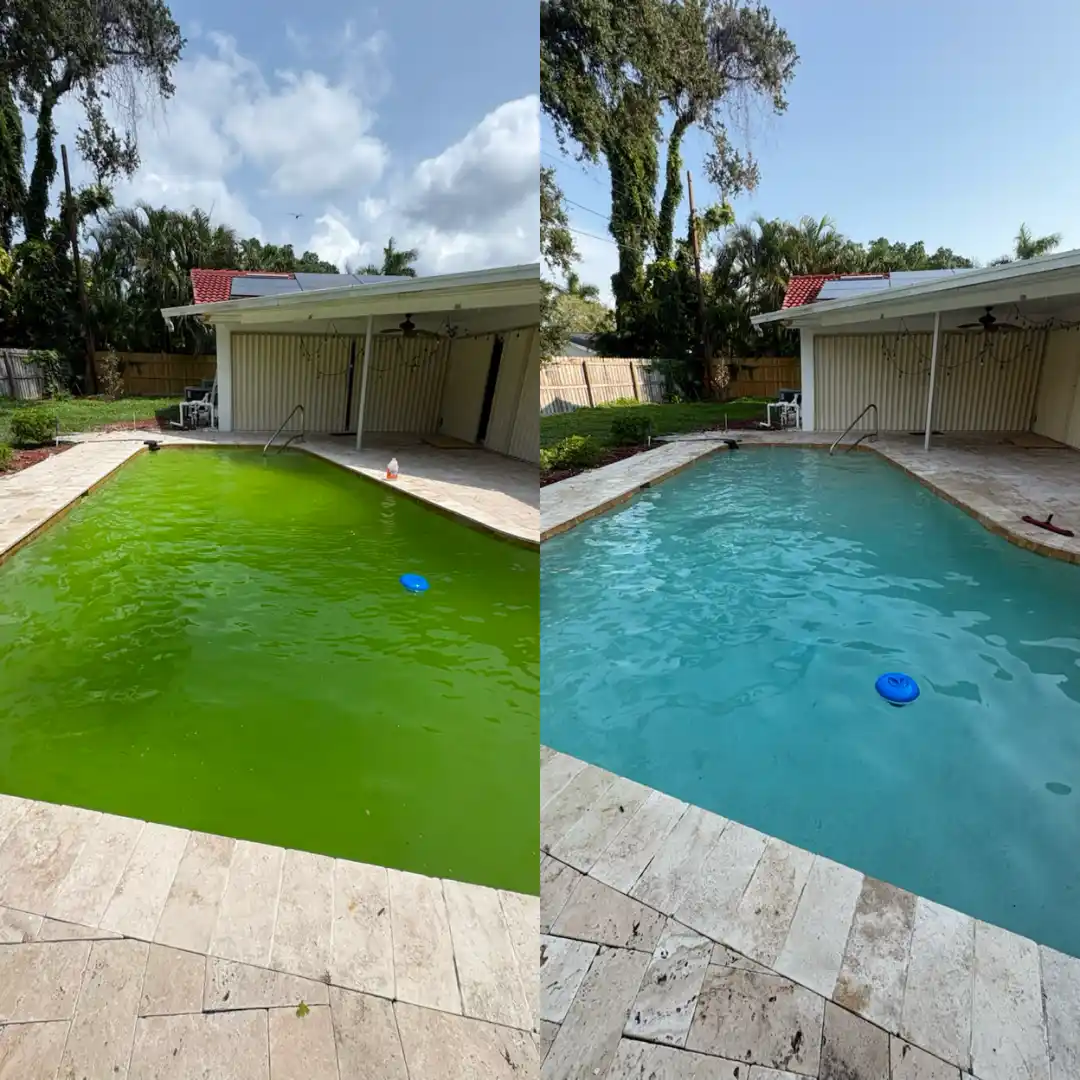
Our Green-to-Clean Pool Recovery Process
Every green pool is different. A lightly cloudy pool with early algae growth requires a different approach than a dark green pool that has been neglected for weeks.
We evaluate the condition of the pool and determine the appropriate treatment based on what we find.
Step 1: Evaluate the Pool & Water Chemistry
The first step is determining what we’re dealing with.
We inspect the overall condition of the pool, test the water, look at circulation and filtration, and check for obvious equipment problems that could have contributed to the algae bloom.
This gives us a better understanding of why the pool turned green and what will be required to recover it.
Step 2: Treat the Algae & Restore Water Balance
Once we’ve evaluated the pool, we begin correcting the conditions allowing algae to grow.
Depending on the pool’s condition, treatment may involve adjusting water chemistry, increasing sanitizer levels, brushing pool surfaces, removing debris, and helping the filtration system remove contaminants from the water.
Walls, steps, corners, and other surfaces are particularly important because algae can cling to areas that aren’t adequately reached by normal circulation.
The objective isn’t simply to change the color of the water. It’s to eliminate the active algae and create water conditions that discourage it from returning.
Step 3: Filter, Clean & Monitor the Recovery
Killing algae is only part of the process.
Once algae has been treated, the dead material and suspended particles still need to be removed from the water. Your pool’s filtration system plays an important role during this stage.
We monitor the pool’s progress, evaluate filtration, perform additional cleaning as needed, and continue adjusting the water until conditions stabilize.
Depending on how severe the algae bloom is, Green-to-Clean recovery may require more than one visit.
How Long Does It Take to Clear a Green Pool?
There isn’t one recovery time that applies to every green swimming pool.
A pool with an early-stage algae problem may respond relatively quickly, while a severely neglected dark-green pool can require considerably more work.
Recovery time can depend on:
- Severity of the algae growth
- Pool size
- Water chemistry
- Amount of debris in the pool
- Filter condition
- Circulation
- Equipment performance
- Weather conditions
- How long the pool has been green
After evaluating your pool, we’ll have a much better understanding of its condition and what may be necessary to restore it.
Can You Clean a Pool That Has Been Green for Weeks?
In many cases, yes.
Even pools that have been neglected for an extended period can often be recovered with the right combination of treatment, cleaning, filtration, and water balancing.
Severely neglected pools may require additional treatments or services depending on their condition.
We’ll evaluate the pool before recommending the appropriate course of action.
Why Did My Pool Turn Green After Heavy Rain?
This is particularly common in Florida.
A major rainstorm introduces a large volume of untreated water into your pool. That can dilute chlorine and alter pH, alkalinity, and other aspects of water chemistry. Wind and storms can also introduce leaves, dirt, pollen, and other organic material.
Combine those conditions with Florida’s warm temperatures and strong sunshine, and algae can begin growing quickly when sanitizer levels aren’t able to keep up.
Checking and rebalancing pool water after periods of heavy rain can help prevent an algae bloom from getting established.
Why Is My Saltwater Pool Green?
Saltwater pools can develop algae too.
A salt chlorine generator produces chlorine, but the pool still depends on maintaining adequate sanitizer levels and proper water chemistry.
A green saltwater pool could indicate low chlorine production, improper chemistry, a dirty or scaled salt cell, incorrect system settings, circulation problems, filtration issues, or another condition affecting sanitation.
We consider both the water chemistry and the salt chlorination system when evaluating algae problems in a saltwater pool.
Can I Just Add More Chlorine to a Green Pool?
Adding sanitizer may be part of the treatment, but successfully recovering a green pool usually involves more than simply pouring additional chlorine into the water.
Water chemistry affects how effectively chlorine works. Algae also grows on pool surfaces, while dead algae and other contaminants need to be removed through cleaning and filtration.
A successful recovery may require a combination of chemical treatment, brushing, debris removal, filtration, cleaning, and continued water testing.
Is It Safe to Swim in a Green Pool?
You should avoid swimming in a pool experiencing a significant algae bloom or when you cannot verify that the water is properly sanitized and chemically balanced.
Green or cloudy water can also reduce visibility beneath the surface, creating an additional safety concern.
Wait until the algae problem has been resolved and the water has returned to appropriate swimming conditions before using the pool.
Preventing Your Pool From Turning Green Again
Once we’ve recovered your pool, the next goal is keeping it that way.
Consistent weekly maintenance is one of the best ways to prevent another major algae bloom.
Regular pool service helps maintain:
- Proper sanitizer levels
- Balanced water chemistry
- Clean pool surfaces
- Effective filtration
- Proper circulation
- Clean skimmer and pump baskets
- Regular equipment monitoring
Weekly service also provides an opportunity to catch developing problems before they result in a green pool.
Green Pool Cleaning in St. Petersburg & Pinellas County
OH DOGGY POOLS provides Green-to-Clean pool recovery and algae treatment throughout St. Petersburg, St. Pete Beach, Gulfport, Treasure Island, Madeira Beach, Tierra Verde, South Pasadena and surrounding Pinellas County communities.
Whether your pool turned green after a storm, developed an algae problem while you were away, or simply got away from you, we’ll evaluate the situation and help get it back under control.
Is Your Pool Green? Let Us Help Get It Clear Again.
The longer an algae problem is allowed to develop, the more difficult it can become to restore the pool.
If you’re looking for green pool clean up in St. Petersburg, pool algae removal, or help recovering a neglected swimming pool, contact OH DOGGY POOLS.
We’ll evaluate the condition of your pool, develop an appropriate recovery plan, and work toward getting your water clean, clear, and ready to enjoy again.
Contact OH DOGGY POOLS today for Green-to-Clean pool recovery service in St. Petersburg and Pinellas County.