
Saltwater Pool Chemistry & Maintenance
Professional Saltwater Pool Service in St. Petersburg, FL
Saltwater pools can make pool ownership easier, but they aren’t maintenance-free. They still require regular cleaning, proper water chemistry, equipment monitoring, and special attention to the salt chlorination system.
OH DOGGY POOLS is owner-operated, and provides professional saltwater pool cleaning and maintenance throughout St. Petersburg and Pinellas County. We understand the unique chemistry and equipment used in saltwater pools and provide the regular care needed to keep your water clear, comfortable, and properly sanitized.
Whether you already have a saltwater pool or simply want a professional who understands how to maintain one correctly, we’re here to help.
What’s Included in Saltwater Pool Maintenance?
Our saltwater pool service includes the same thorough cleaning and maintenance provided with our regular weekly pool service, along with additional attention to your salt chlorination system.
Service may include:
- Water testing and chemical balancing
- Salt level monitoring
- Salt chlorinator system inspection
- Salt cell inspection
- Monitoring chlorine production
- Checking for scale and mineral buildup
- pH and alkalinity monitoring
- Stabilizer monitoring
- Skimming and debris removal
- Brushing pool walls, steps, and tile line
- Vacuuming as needed
- Emptying skimmer and pump baskets
- Filter and equipment monitoring
- Weekly service reports
- Reporting potential equipment or water chemistry problems
Saltwater Pools Still Need Regular Chemical Balancing
One of the biggest misconceptions about saltwater pools is that they don’t use chlorine.
They do.
Instead of relying primarily on chlorine that’s manually added to the pool, a saltwater system uses a salt chlorine generator to convert dissolved salt into chlorine. That chlorine sanitizes the water just as it does in a traditional chlorine pool.
The process can make chlorine production more consistent, but it doesn’t eliminate the need to test and balance your pool water.
A properly maintained saltwater pool still requires monitoring of chlorine, pH, alkalinity, stabilizer, salt concentration, and other aspects of water chemistry.

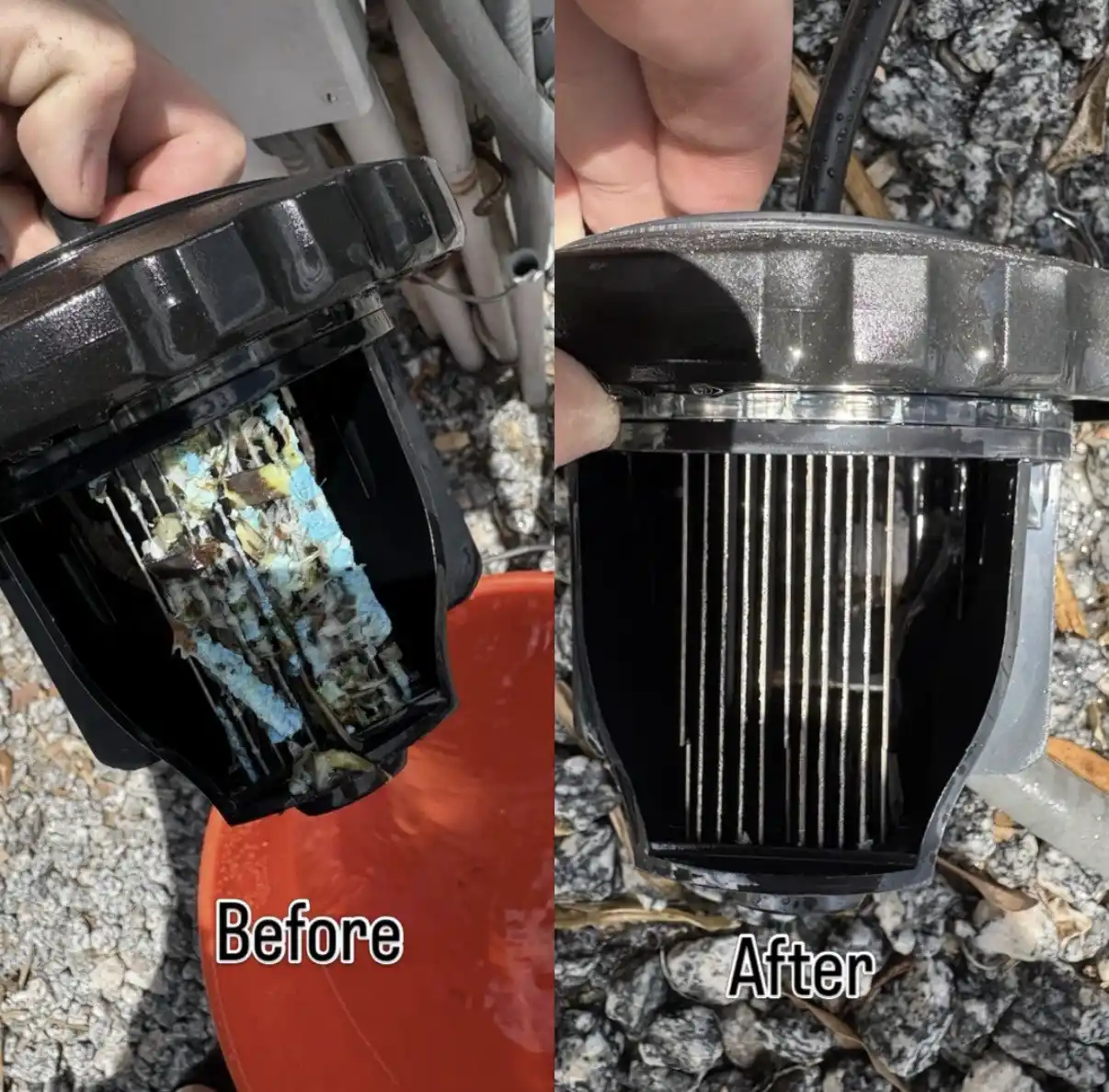
Salt Chlorinator & Salt Cell Inspection
The salt cell is one of the most important components of your saltwater pool system. As water passes through the cell, the system generates chlorine that helps keep your pool sanitized.
During regular maintenance, we monitor the salt chlorination system for signs that it may not be operating properly.
Potential warning signs can include:
- Low or inconsistent chlorine production
- Warning lights or error messages
- Visible scale buildup on the cell
- Unexpected changes in salt readings
- Recurring algae
- Cloudy water despite normal filtration
- A system that appears to be running but isn’t producing enough chlorine
Catching these signs early can help prevent water-quality problems and unnecessary strain on the system.
Preventing Scale Buildup on Salt Cells
Mineral scale can accumulate on the plates inside a salt cell and interfere with its ability to produce chlorine efficiently.
Proper water chemistry is an important part of controlling scale. We monitor your pool chemistry and inspect the salt system for signs of buildup or declining performance.
Salt cells should be cleaned when their condition requires it rather than automatically over-cleaning them. If we see evidence that your salt cell needs attention, we’ll let you know and recommend the appropriate next step.
Why Does the pH Keep Rising in My Saltwater Pool?
Saltwater pool owners commonly notice that their pool’s pH tends to rise over time.
This can occur as part of the chlorine-generation process and makes regular pH monitoring particularly important in a saltwater pool. Allowing pH to remain too high can contribute to cloudy water, scaling, reduced chlorine effectiveness, and mineral deposits on pool surfaces and equipment.
Regular water testing allows us to identify these changes and make appropriate adjustments before they become larger problems.
Why Is My Saltwater Pool Cloudy?
A saltwater pool can become cloudy for many of the same reasons as a traditional chlorine pool.
Possible causes include:
- Improper chlorine levels
- Unbalanced pH or alkalinity
- Poor filtration or circulation
- Heavy rain
- High swimmer load
- Algae growth
- Filter problems
- Salt chlorinator problems
- Improper stabilizer levels
Cloudy water isn’t necessarily a problem with the salt itself. The entire pool system and water chemistry need to be evaluated to determine what’s happening.
Regular professional maintenance helps catch these conditions before they develop into persistent water-quality problems.
Why Is There Algae in My Saltwater Pool?
Having a saltwater system doesn’t guarantee that a pool can’t develop algae.
If the salt chlorinator isn’t producing enough chlorine—or water chemistry, circulation, or filtration isn’t where it needs to be—algae can begin growing just as it can in any other swimming pool.
That’s one reason we don’t simply look at whether the salt system is turned on. We monitor the condition of the pool itself, test the water, and look for signs that the system may not be keeping up with the pool’s needs.
How Often Should a Salt Cell Be Cleaned?
There isn’t one cleaning schedule that’s right for every salt cell.
How quickly scale develops depends on factors including water chemistry, calcium levels, pool usage, operating conditions, and the specific chlorination system. A cell should be periodically inspected and cleaned when buildup warrants it.
Unnecessary or overly aggressive cleaning can also shorten the life of a salt cell, which is why inspection should come before cleaning.
How Long Does a Saltwater Pool Cell Last?
Salt cells are wear components and eventually need replacement. Their lifespan can vary considerably based on the system, how frequently it operates, water chemistry, maintenance, and environmental conditions.
Proper chemistry and routine monitoring can help protect the cell and allow developing problems to be identified before the system stops producing chlorine altogether.
If we notice signs that your salt system isn’t performing as expected, we’ll let you know.
Saltwater Pool Care for Florida Conditions
Saltwater pools in St. Petersburg face some particularly challenging conditions.
Florida’s heat and intense sunshine can increase chlorine demand, while heavy summer rain can alter water chemistry and dilute salt and other chemicals. Storms introduce additional debris, and warm water creates favorable conditions for algae if sanitizer levels drop.
That’s why even an automated salt chlorination system benefits from consistent weekly professional attention.
Weekly Saltwater Pool Service in St. Petersburg & Pinellas County
OH DOGGY POOLS provides professional saltwater pool service throughout St. Petersburg, St. Pete Beach, Gulfport, Treasure Island, Madeira Beach, Tierra Verde, South Pasadena and surrounding Pinellas County communities.
Our service combines routine pool cleaning with professional water testing, chemical balancing, salt system monitoring, and equipment inspections.
You get the convenience of a saltwater pool without having to constantly wonder whether your water chemistry or chlorination system is working the way it should.
Need Help Maintaining Your Saltwater Pool?
If you’re searching for a saltwater pool service in St. Petersburg, need help maintaining your salt chlorinator, or simply want reliable weekly maintenance from a pool company that understands saltwater systems, contact OH DOGGY POOLS.
We’ll keep an eye on the cleaning, chemistry, and equipment so you can concentrate on enjoying your pool.
Contact OH DOGGY POOLS today to learn more about professional saltwater pool maintenance in St. Petersburg and Pinellas County.